The Legend of Hamilton Bell
|
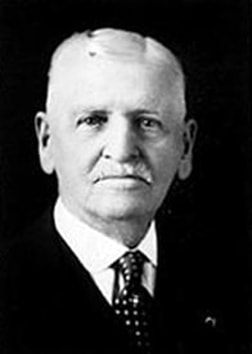
Ham Bell, into whose arms Alf Walker had fallen at A. J. Peacock’s saloon after the Ed Masterson shooting, had been born July 31, 1853 Hannibal Boettler Beltz in Washington County, Maryland. When he was nine, he and two siblings became orphans. Five years later, after living with an uncle, he set off on his own. When he was nineteen, he was a restless jewelry store salesman in Pennsylvania.
In 1865, the newspaper editor, Horace Greeley, had exhorted, “G0 west, young man.” Go west, and grow up with the country. Ham Bell in 1872, became another young man who took Greeley’s advice. This was of course the same year Greeley was unsuccessfully running for president against the incumbent Ulysses S. Grant. One of the skills Bell had acquired was cleaning clocks and doing so, paid his way to Kansas. Like many pioneers of the Old West, Ham Bell may have found a need to reinvent himself as he travelled, at age 18, from Maryland to Kansas. En route, he changed his name to Hamilton Butler Bell. His first stop, a brief one, was in Lawrence. He moved on to Abilene, Ellsworth, and then, Great Bend. |
When Ham arrived in Great Bend, KS, he was 19. Ham Bell hunted buffalo a while, then got a position with a Santa Fe agent whose office was a boxcar and worked there until his appointment as assistant marshal under Great Bend Marshal, James Gainsford.
He worked several jobs, including driving freight wagons and delivering ice. Not surprisingly, given the heat of west Kansas summers, there was a great demand for ice on the frontier and by the summer of 1874, Bell had a contract to deliver ice, railroad ties, and other material to the Atchison, Topeka & Santa Fe Railroad as it steadily worked its way through Kansas and into Colorado.
Ham Bell made Dodge City his headquarters and it would be home for the rest of his life. His future there was confirmed that summer when he married Josephine Dugan, the daughter of a local farmer.
He worked several jobs, including driving freight wagons and delivering ice. Not surprisingly, given the heat of west Kansas summers, there was a great demand for ice on the frontier and by the summer of 1874, Bell had a contract to deliver ice, railroad ties, and other material to the Atchison, Topeka & Santa Fe Railroad as it steadily worked its way through Kansas and into Colorado.
Ham Bell made Dodge City his headquarters and it would be home for the rest of his life. His future there was confirmed that summer when he married Josephine Dugan, the daughter of a local farmer.
Entrepreneurship and Enforcement in the Wild West: Tracing the Vibrant Life and Unyielding Spirit of Ham Bell
|
Delve into the vibrant life of the legendary Ham Bell, an epitome of the Wild West spirit. Born as Hannibal Bettler Belts in Washington County, Maryland, Ham embarked on a journey that led him to Dodge City, Kansas, leaving an indelible mark on its economic and cultural life.
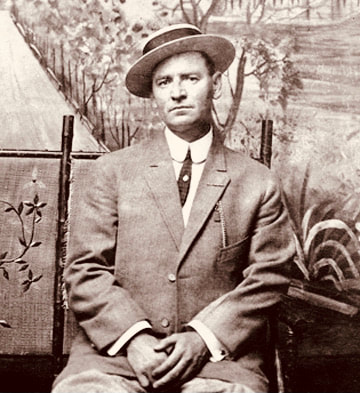
In his early life, Bell was a restless jewelry store salesman who had acquired the skill of cleaning clocks. This skill would later pave his way to Kansas. He took Horace Greeley's famous advice, "Go West, young man, go west and grow up with the country," and embarked on a journey of self-discovery and reinvention. Ham Bell's arrival in Dodge City marked the beginning of his various ventures. His first business, a sod livery stable, grew into the largest structure in Western Kansas. Known far and wide as the Elephant Livery Stable, it became a meeting point for people throughout the region. Bell's entrepreneurial spirit did not stop there. He opened a dance hall and was the first to introduce the exotic Can Can dance to Dodge City. The dance quickly became the talk of the town, bridging the cultural gap between the frontier and the East Coast. |
|
|
Not just an entrepreneur, Ham Bell was also a respected lawman. His career in law enforcement spanned an impressive 36 years. Ham Bell's rule of never shooting his gun garnered him respect and admiration. His strategy was to draw his gun in time to make the other man freeze, an approach that contributed to his survival in the volatile environment of the Wild West.
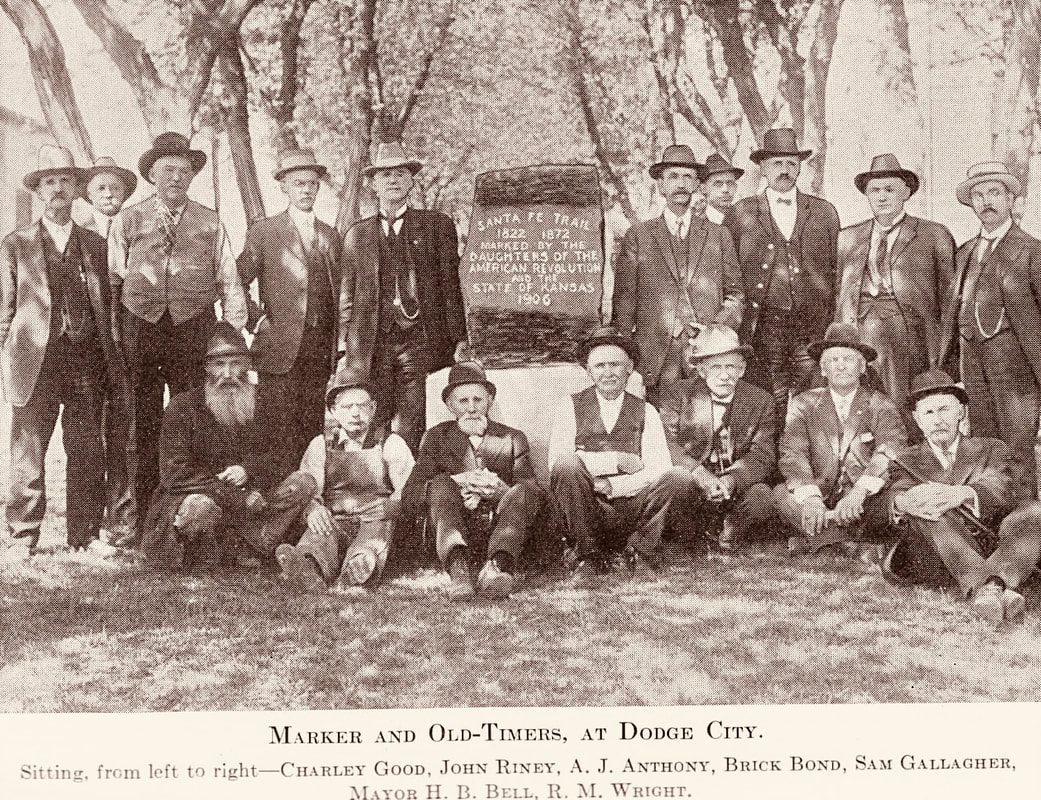
Bell's political career was also noteworthy. He served two terms as mayor of Dodge City and two terms as a Ford County Commissioner. His unique physical attributes and charisma undoubtedly played a role in his political success. Beyond politics and law enforcement, Bell made significant contributions to modernizing Dodge City. He introduced the first women's restroom on the Santa Fe Trail and the first motorized ambulance and hearse in Dodge City. He also operated a furniture store and mortuary business, leaving a floral tribute on the casket of anyone who passed away in the city. |
|
Bell's adventurous life didn't stop there. He owned the first car dealership in southwest Kansas and operated a pet shop. When he died in 1947 at the age of 94, he left behind a rich legacy and a multitude of stories that continue to captivate those interested in the history of the Wild West. The life of Ham Bell serves as a testament to the indomitable spirit of the Old West, painting a picture of a time of resilience, entrepreneurship, and cultural evolution.
|
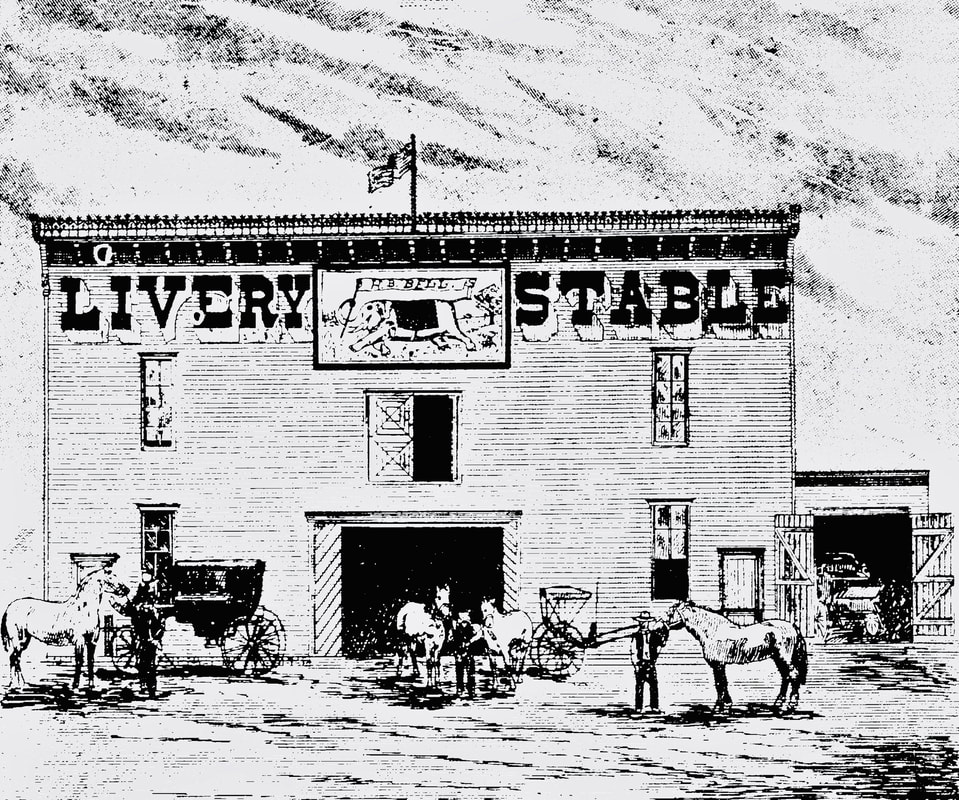
His first business in Dodge City was a sod livery stable, which later grew into the largest structure in Western Kansas; an 85 by 125 foot stable known far and wide as the Elephant Livery Stable. With an elephant painted on the side, it served as a rendezvous and bedding down place for horses and mules as well as people from throughout the region.
Another of Ham Bell’s ventures was a dance hall on Front Street and in 1878, Bell was the first to introduce the can-can to Dodge City. Bell had read about the dance that was the rage in Europe and had learned that a troupe performing it was touring the western half of the United States. He thought the citizens of and visitors to Dodge City were ready for such exotic entertainment, so he booked the dance company. The first performance of the lovely high—kicking ladies was on July 4, 1878. Suddenly, the frontier did not seem as far from the sophisticated East Coast and Chicago. Though his Varieties saloon only lasted one season, the lively Parisian dance was the talk of the town. |
|
Ida Rath, daughter—in—law of the businessman Charles Rath, once reminisced about Bell that he “had the bluest of blue eyes and brown hair, was spare of build but broad shouldered. He had a decided Roman nose and a very determined chin." His distinctive looks had to help him during forays into politics, which included two terms as mayor of Dodge City and two terms as a Ford County commissioner.
But it was as a lawman that many people came to know Ham Bell, considering he spent thirty-six years at it. There was a lengthy break while he established himself in Dodge City, and in 1880 he would be appointed deputy U.S. marshal, a position he would hold for twelve years. He also would be the sheriff of Ford County, first elected in 1888. Bell left the office in 1910 to become the head of Dodge City’s police department. Part of Ham Bells legend may have been recreated through the model for Matt Dillon on the popular TV show Gunsmoke.
But it was as a lawman that many people came to know Ham Bell, considering he spent thirty-six years at it. There was a lengthy break while he established himself in Dodge City, and in 1880 he would be appointed deputy U.S. marshal, a position he would hold for twelve years. He also would be the sheriff of Ford County, first elected in 1888. Bell left the office in 1910 to become the head of Dodge City’s police department. Part of Ham Bells legend may have been recreated through the model for Matt Dillon on the popular TV show Gunsmoke.
|
During the decades as a police officer he never shot a man, because he was so quick on the draw that the other man froze before he could clear leather. One point about his gunplay or lack of it – came about in a 1931 interview.
“The idea that I never drew a gun on a man when I was sheriff here in the early days is all wrong. I just never shot a man,” said Ham. That was mainly because I was always careful to draw my gun in plenty of time before the other man drew his.” "If I'd never drawn a gun. I wouldn't have lived a week." Ham gained some fame of a sort by saying, as he looked the ruffian straight in the eye, "A kid will shoot quicker than a man." |
Other endeavors by Ham Bell included the first constructed women’s restroom on the Santa Fe Trail, operating a furniture store and mortuary business. Ida Ellen Rath noted one nice detail: "the best thing we remember him for was that he always laid a floral tribute on the casket of anyone who passed away in Dodge City."
The industrious and farsighted Bell would go on to own the first car dealership in southwest Kansas, and as proprietor of an ambulance service he introduced the first motorized ambulance in Dodge City. And in case that transportation had not always gone swiftly enough, Bell also introduced the first motorized hearse.
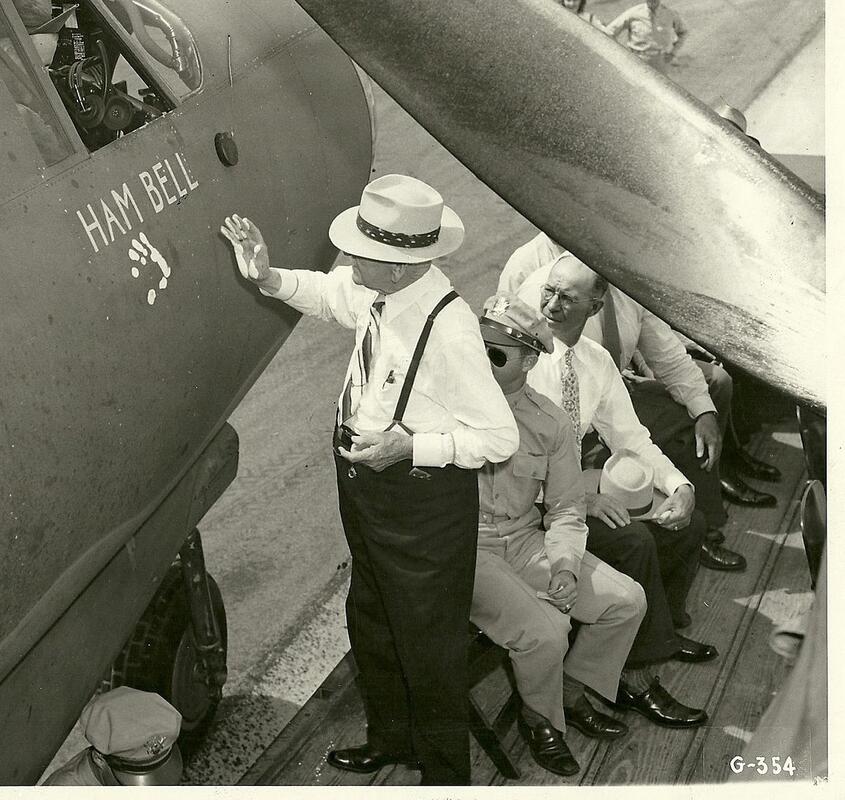
When he died, in 1947 at ninety-four, he was operating a pet shop. (During World War II, an Army Air Corps plane featuring his handprint was named for Ham Bell.)
The industrious and farsighted Bell would go on to own the first car dealership in southwest Kansas, and as proprietor of an ambulance service he introduced the first motorized ambulance in Dodge City. And in case that transportation had not always gone swiftly enough, Bell also introduced the first motorized hearse.
When he died, in 1947 at ninety-four, he was operating a pet shop. (During World War II, an Army Air Corps plane featuring his handprint was named for Ham Bell.)