The County Seat War in Gray County
|
The stories of the different county-seat wars that marked the history of the development of western Kansas, differed each from the other, but there was one point of resemblance common to them all. All of them were distinguished by a disregard of honor and a willingness on the part of both parties to the contest to violate about every civil and moral law in order to win. In most of the county-seat wars the fighting, that is the real killing, commenced before, at, or immediately after, the alleged election, but in the case of Gray County the bloody finale was postponed for more than a year. The county-seat war in Gray County did not differ in that respect from the others, but it had wider ramifications and elements of almost romance that distinguished it from all the rest.
|
|
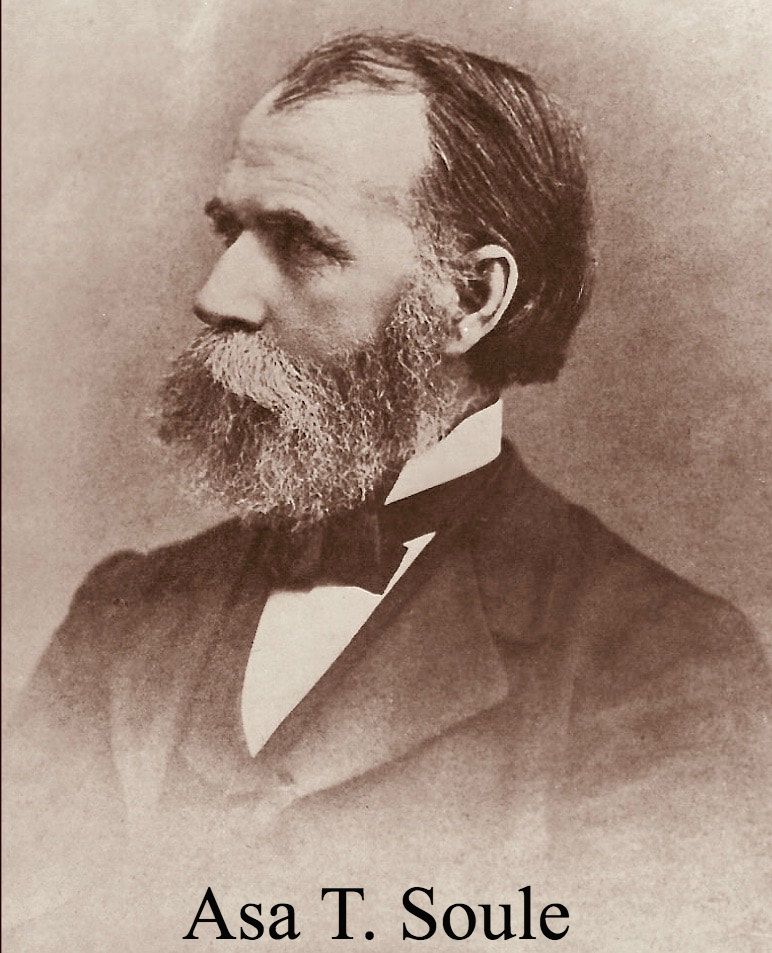
Asa T. Soule
The central figure in the drama, mostly tragedy but which contained certain elements of comedy, was A. T. Soule, of Rochester, New York, reputed to be worth $10,000,000, accumulated from the sale of Hop Bitters to a credulous public. Why Soule came to Kansas is somewhat hard to understand. He had, if reports were true, more money than he could spend in the purchase of mere creature comforts. He did not need to dangers, and vicissitudes of life on the wind-swept plains of western Kansas.
|
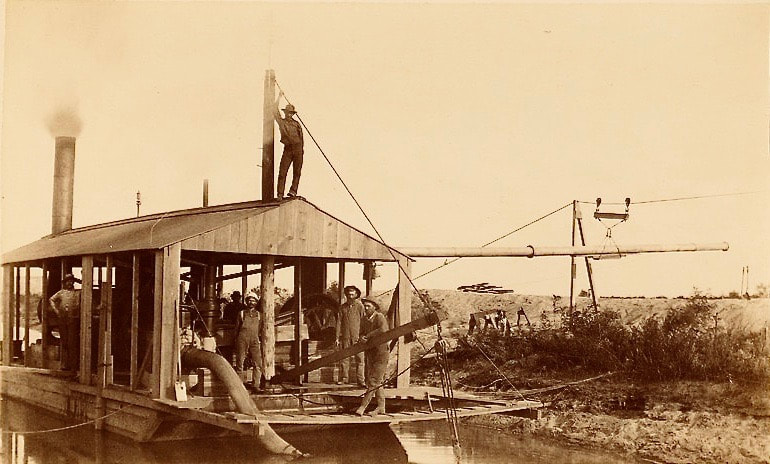
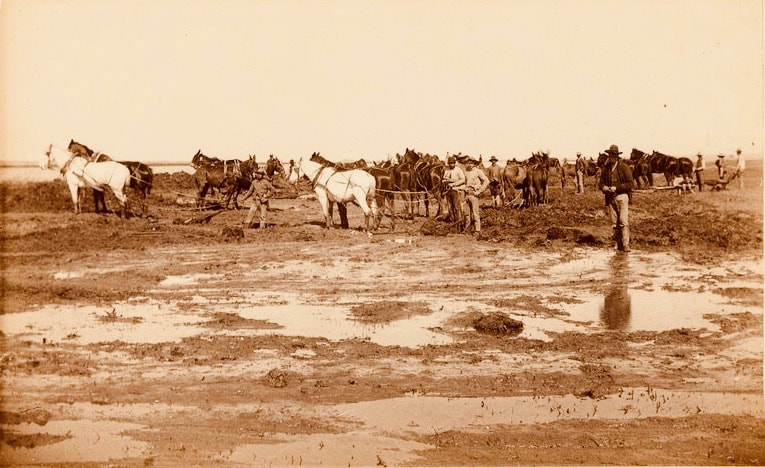
Asa t. Soule founded the town of Ingalls and to insure it as the gray county seat, he built a bogus railroad. His other exploits included arming men to raid the town of Cimarron and invested in Dodge City land to take advantage of the growth Soule was sure would come with successes of irrigation. His main interest lay in the profits to be made from the Eureka irrigation canal company. It took two years to dig the 96-mile canal that snaked up the north side of the Arkansas River through gray and ford counties.
|

|
It may be that there was the lure of adventure drawing him on, or it may be that he thought he saw in the far-flung prairie landscape where the sun rose and set without a tree to cast a shadow either in the morning or at eve, the setting for an empire of which he would be the builder. At any rate he came and as a result of his coming there was strife and bloodshed, the memories of which last among the older inhabitants even till now. For a man who had succeeded in building up a great fortune in a business venture in the East, A. T. Soule's projected enterprises in Kansas were singularly unsuccessful.
Soule Canal
He built a great irrigating ditch in western Kansas, which did not irrigate, although he did succeed in floating many hundreds of thousands of dollars of bonds, which gilded promises to pay may yet, no doubt, be found in the vaults of disappointed eastern purchasers. His plan to locate the county seat and build a great town on the banks of the Arkansas River finally came to naught; the town he organized still lingers, but has less than a hundred inhabitants, and the county seat has long since gone to its rival.
|
|
County Seat War
In the 1887 county seat election in Gray County, three towns were vying for the position: Montezuma, Ingalls, and Cimarron. Millionaire Asa T. Soule persuaded the residents of Montezuma to withdraw their petition for county seat and vote for Ingalls. To accomplish this Soule promised to build Montezuma a railroad and freely dispersed checks ranging from $100 to $500 to its residents. In spite of Soule's efforts, Cimarron was the winner of the election. In validating the election returns, the Kansas Supreme Court ordered the county records to be moved to Ingalls. This is the story of an attempt to remove the remaining records from the Cimarron county clerks office on the morning of January 12, 1889.
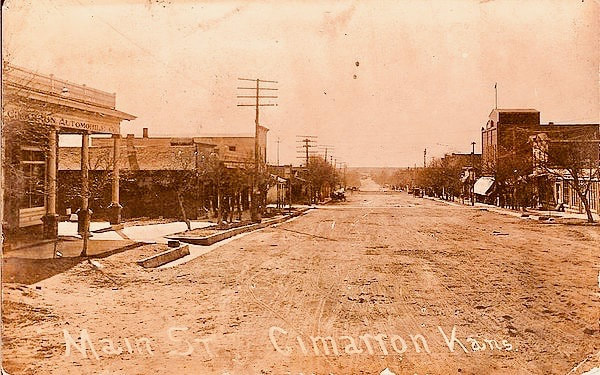
TOWN OF CIMARRON 1880'S
|
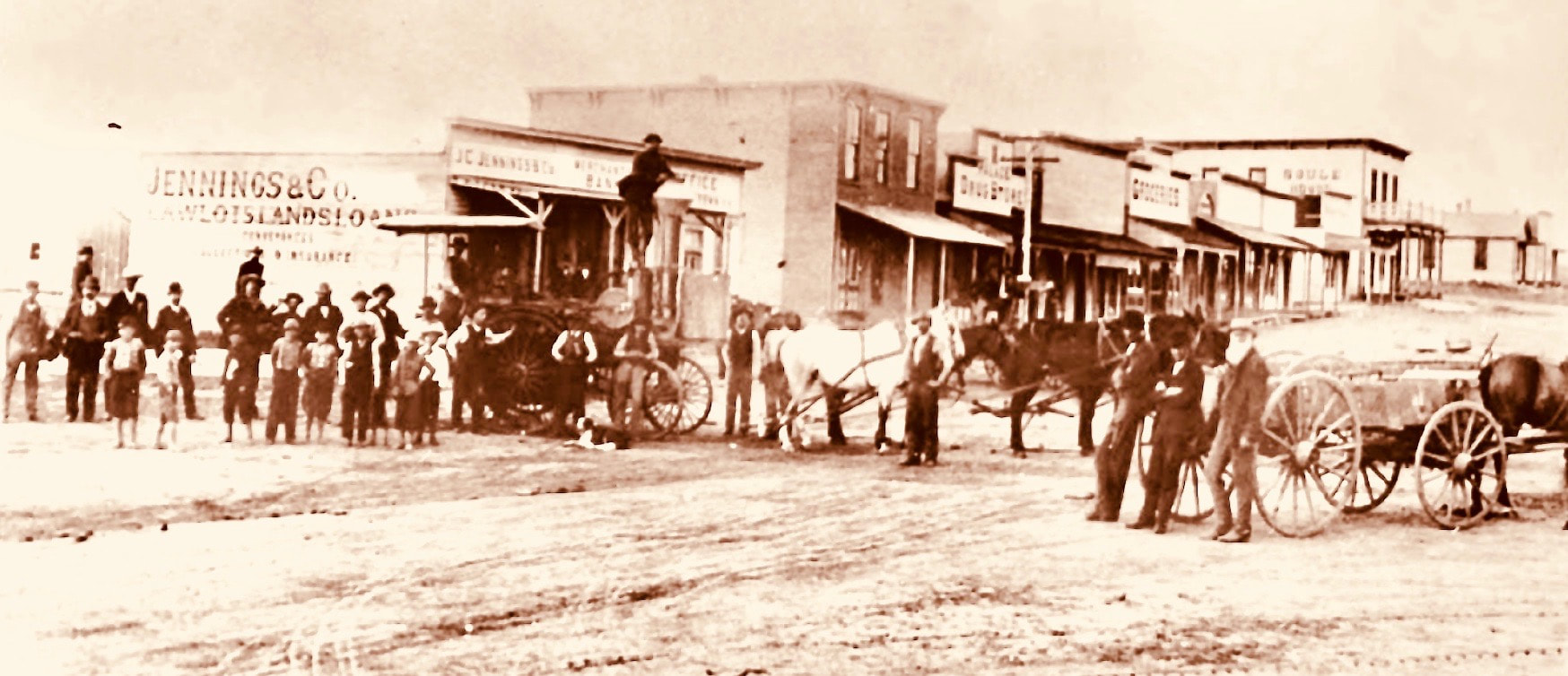
TOWN OF INGALL'S 1880'S
|
|
The Battle of Cimarron tells the story of a famous gunfight between the people of Cimarron, Kansas, and a group of lawmen led by Bill Tilghman. The gunfight occurred on January 12, 1889, when Tilghman and his invaders attempted to take the county records from the Old Gray County Courthouse back to Ingalls. The story is told from a first person perspective and is divided into six sections, including interactive media.
|
Power Plays and Prairie Skirmishes: A Stirring Dive into the Gray County Seat Wars of 1887
If there's one thing that defines the Wild West, it's the fiery, dynamic history that unfolded on the dusty streets and rugged prairies. This is particularly true of Gray County in 1887, a year marked by political maneuvering, power plays, and audacious skirmishes known as the County Seat Wars.
The heart of the story lies in the ambitious figure of Asa T Sewell, a millionaire who left no stone unturned in his quest to swing the vote for Ingalls during the county seat election. Asa Sewell, a wealthy man with grand dreams and a willingness to pay for them, attempted to secure votes through promises of railroad construction and generous checks handed out to residents. Despite his efforts, the town of Cimarron emerged as the winner, igniting a series of events that would make history.
Following the election, a daring raid on the Cimarron courthouse marked the beginning of a series of conflicts. The objective was to reclaim the county seat records, a mission spearheaded by Bill Tillman and his posse, including the narrator of our tale. This band of audacious individuals faced the tension-filled streets, engaging in a nail-biting siege that ultimately resulted in the reclaiming of the records.
However, the battle was far from over. In the aftermath of the raid, a wild ride across the prairie ensued, leading to the heart-stopping Battle of Simeron. Amidst the gunfire and chaos, brave tales emerged, particularly those of Tom, Jim, and Neil who chose to stay behind. Their weapons were their only defense against the mob, a testament to their courage and dedication.
Yet, the saga did not end there. The aftermath of the conflict saw a state of tension and threats permeate Cimarron. Reports from Kansas City and Denver compelled Jake Shoup, the chairman of the county supervisors, to let the trio go, highlighting the influence of external forces in the local dynamics.
The 1887 County Seat Wars is a tale that goes beyond mere conflict over a county seat. It paints a vivid picture of the power dynamics, alliances, and struggles that were woven into the fabric of the Wild West. It highlights the individuals who were caught in the whirlwind of events, their tales of courage, resilience, and sometimes, audacity. The legacy of these events is a testament to the tumultuous and gripping narrative of the Wild West, forever etched in the annals of history.
The heart of the story lies in the ambitious figure of Asa T Sewell, a millionaire who left no stone unturned in his quest to swing the vote for Ingalls during the county seat election. Asa Sewell, a wealthy man with grand dreams and a willingness to pay for them, attempted to secure votes through promises of railroad construction and generous checks handed out to residents. Despite his efforts, the town of Cimarron emerged as the winner, igniting a series of events that would make history.
Following the election, a daring raid on the Cimarron courthouse marked the beginning of a series of conflicts. The objective was to reclaim the county seat records, a mission spearheaded by Bill Tillman and his posse, including the narrator of our tale. This band of audacious individuals faced the tension-filled streets, engaging in a nail-biting siege that ultimately resulted in the reclaiming of the records.
However, the battle was far from over. In the aftermath of the raid, a wild ride across the prairie ensued, leading to the heart-stopping Battle of Simeron. Amidst the gunfire and chaos, brave tales emerged, particularly those of Tom, Jim, and Neil who chose to stay behind. Their weapons were their only defense against the mob, a testament to their courage and dedication.
Yet, the saga did not end there. The aftermath of the conflict saw a state of tension and threats permeate Cimarron. Reports from Kansas City and Denver compelled Jake Shoup, the chairman of the county supervisors, to let the trio go, highlighting the influence of external forces in the local dynamics.
The 1887 County Seat Wars is a tale that goes beyond mere conflict over a county seat. It paints a vivid picture of the power dynamics, alliances, and struggles that were woven into the fabric of the Wild West. It highlights the individuals who were caught in the whirlwind of events, their tales of courage, resilience, and sometimes, audacity. The legacy of these events is a testament to the tumultuous and gripping narrative of the Wild West, forever etched in the annals of history.