Henry B. Douglass 1867
|
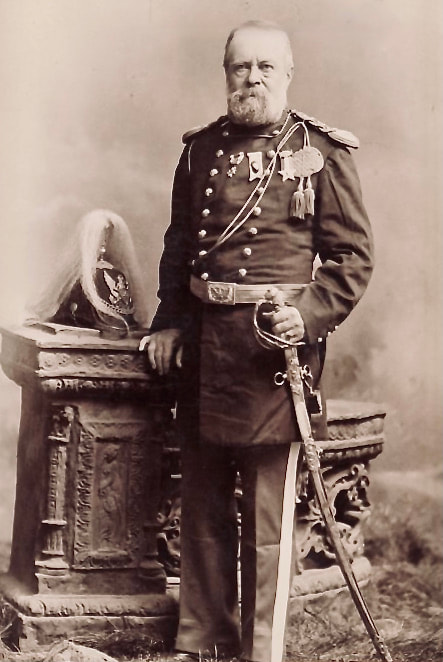
Henry B. Douglass was born on March 9, 1827. Henry Douglass graduated from West Point in 1852 and was promoted to Bvt. Second Lt. and assigned to the 7th Infantry and embarked on an Army career of nearly 40 years. He was a professor of drawing at West Point from 1858 to 1861 and was promoted to captain at the beginning of the Civil War. Douglas participated in significant battles, including Bull Run (1861); Murfreesborough (1862), where he breveted a major; and Stones River (1862-1863), where he was wounded.
After a leave of absence, he was assigned to Fort Dodge, Kansas, for three years, though at one point, he was on sick leave for four months. He was Superintendent of Indian Affairs in Nevada from 1869 to 1871 and spent the next four years in Texas with several leaves of absence. He retired from the Army in 1891 and died the following year. In Dewcember of 1866, the Douglass's arrived at Fort Dodge from Columbus, Ohio, with three young sons. Being among the first to reach the Fort, conditions were less than luxurious for the family. They did not move into a nice wood or stone house fit for a Commanding Officer but into what was available - a sod dugout. Facing the Arkansas River, the back and sides of the dugout were covered with earth. And being close to the River, it was subject to high water. And it couldn't have been easy raising three little boys in a dirt house. |
This a photograph showing Henry B. Douglass who was born March 9, 1827 at West Point, where his father David Bates Douglass was Professor of Engineering. Henry Douglass graduated from West Point in 1852, and was promoted to Bvt. Second Lt. and assigned to the 7th Infantry. He was stationed at Fort Dodge, Kansas.
Limestone Construction
|
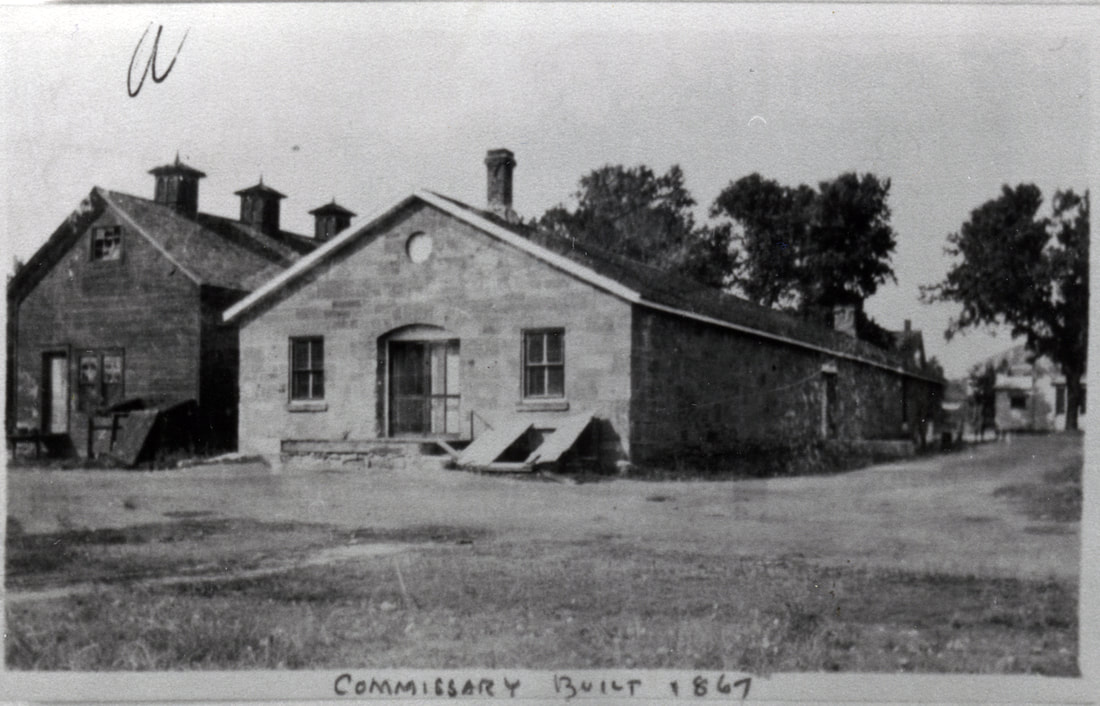
With questions of peace undecided but hoping to improve conditions, officers at Fort Dodge commandeered government wagons and sidetracked them to haul in quarried limestone. Then, using civilian labor, construction began on two barracks, each designed to house fifty men, a formal headquarters, and commanding officer's residence, a hospital, a quartermaster's depot, and supply buildings. And none too soon, as one commander, Maj. Henry Douglass, bitterly complained: "the house I lived in was no palace but a hovel. I never moved from it until I was a wasted cholera convalescent, my wife died in it, and a want of proper comfort was, in my opinion, the main cause of her death."
|
Without timber, efficient transportation, and nearby quarries, converting Fort Dodge from an encampment of dugouts to a permanent installation posed a strategic challenge for the U. S. Army. The Army was willing to pay a premium for skilled carpenters. But when they found that local timber was not suitable for construction, they were forced to rely on the principal native building material of the Southwest: adobe or sod.
Isadore Douglass
|
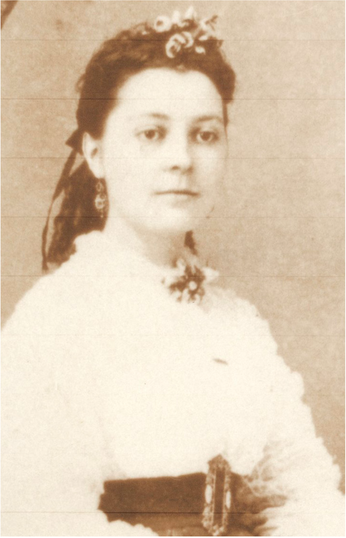
ISADORE Bowman Douglass was born on February 5, 1841, at Wilkes-Barre, Pennsylvania, to Angelina Brobst Bowman and Captain Francis Loring Bowman, 9th Infantry, U.S. Army. She was married to Henry B. Douglass on July 15, 1858, at which time Douglass had a position at the Military Academy at West Point, as Principal Asst. Professor of Drawing, until July 2, 1861.
While at West Point, Isadore gave birth to two sons: Henry Bowman Douglass, born June 29, 1859, and Francis "Frank" Douglass, born December 8, 1860. Isadore was with her husband in Ohio when he was in charge of the Chief Mustering and Disbursing Office of the State of Ohio, September 19, 1864, to June 30, 1866. While in Columbus, Ohio, Isadore gave birth to a third son, Charles Edward Douglass, on August 26, 1866. Isadore Douglass, wife of commanding officer Henry Douglas, described the men's quarters as "holes burrowed in the bank of the river." Officers' Quarters were little better. When they first arrived at Fort Dodge in December 1866, the Douglass's had "no house to go into." Within a few days, Isadore, her husband, and three children, including a nursing baby, moved into a "mud" house with "three rooms and a kitchen." Read Joanne VanCoevern Article Letters of Isadore and Henry Douglass 1866-67 Page 12 - 15 published in Wagon Tracks, August 2016. |
In a series of letters to her mother, Mrs. Bowman in Wilkes Barre, Penn., Isadore painted an optimistic picture with a minimum of complaints. After all, the dugout was comfortable except when the River flooded. And everyone at the Fort knew that new living quarters were planned for officers and enlisted in the coming months. But, sadly, Isadore Douglass did not get to enjoy the comforts of the new stone 11-room, one-and-a-half story Commanding Officers quarters.
Isadore reported her husband's plans to build "splendid" stone buildings within a year. But in 1867, many obstacles were standing in the way. Quarrying the stone miles from the Fort left workers exposed to Indian attack, and the skilled labor needed to construct permanent stone buildings was expensive – as much as $100/month, or three times that of an average laborer. It is no accident that the first stone structures, built-in 1867, were the Headquarters/Commanding Officers' Quarters (Custer House), Hospital (Pershing Barracks), and Quartermaster Storage Building (Museum). Unfortunately, by the time the Commanding Officers' Quarters were completed, Isadore Douglass had perished in a cholera outbreak that wreaked havoc on the Plains.
Part 1: InPioneering the Heartland: Isadore Douglas' Perilous Journey and the Spirit of the Santa Fe Trail
In the latest episode of our historical podcast, we delve into the heart-rending tale of Isadore Douglas and her family's migration westward during the post-Civil War era. As they traverse the Santa Fe Trail, we're granted an intimate glimpse into the rugged life of pioneers through Isidore's correspondence with her mother. These letters reveal the juxtaposition of life's joys and fears as Isidore anticipates motherhood amidst the looming threats of cholera and economic struggles.
As we retrace Isidore's footsteps, we're transported from Columbus, Ohio, to the vast Kansas plains. Her husband Henry's military promotions propel the family into an uncertain future. This episode paints a vivid picture of the era, with stories of storms tearing through encampments, frigid nights under the stars, and wildlife encounters on the open plains.
Our narrative also examines the lifelines that connected travelers across the desolate wilderness, such as the stage stations and the Barlow-Sanderson coaches on the Fort Riley-Fort Larned Road. Arriving at Fort Zarha, we explore the legends of the Santa Fe Trail and the dangers that pioneers like Isidore faced, including the notorious Pawnee Rock.
The episode doesn't merely recount an arduous journey; it celebrates the enduring spirit of those who braved the unknown to shape the nation. We explore the challenges of wagon travel, the careful management of provisions, and the perilous creek crossings that tested the resolve of these early settlers.
Isidore's narrative is interwoven with historical context, providing a rich tapestry of the times. From her family's meticulous preparations to the military's cholera prevention efforts, we get a comprehensive look at the intricacies of life on the move in the 19th century.
Her letters home offer a raw and powerful perspective on the daily realities of the frontier. Isadore speaks of the isolation and beauty of the plains, the camaraderie and tension within their traveling party, and the stark changes they faced as they left behind the settled life of the East for the untamed West.
Through the eyes of Isadore, we experience the indomitable spirit of a nation in flux, where every family's story contributes to the rich tapestry of American history. This episode is a tribute to those who endured and thrived on the frontier, shaping the legacy of the American West for generations to come.
As we wrap up this journey, we are reminded of the importance of preserving our nation's history. We are called to support efforts to maintain historical sites like Fort Dodge, ensuring that the stories of pioneers like Isidore Douglas are not forgotten but continue to inspire future generations.
So join us on this historical voyage, as we unearth the trials and triumphs of a family that embodied the pioneering spirit of America. Their story is our story, and it is one that continues to echo through the annals of time.
As we retrace Isidore's footsteps, we're transported from Columbus, Ohio, to the vast Kansas plains. Her husband Henry's military promotions propel the family into an uncertain future. This episode paints a vivid picture of the era, with stories of storms tearing through encampments, frigid nights under the stars, and wildlife encounters on the open plains.
Our narrative also examines the lifelines that connected travelers across the desolate wilderness, such as the stage stations and the Barlow-Sanderson coaches on the Fort Riley-Fort Larned Road. Arriving at Fort Zarha, we explore the legends of the Santa Fe Trail and the dangers that pioneers like Isidore faced, including the notorious Pawnee Rock.
The episode doesn't merely recount an arduous journey; it celebrates the enduring spirit of those who braved the unknown to shape the nation. We explore the challenges of wagon travel, the careful management of provisions, and the perilous creek crossings that tested the resolve of these early settlers.
Isidore's narrative is interwoven with historical context, providing a rich tapestry of the times. From her family's meticulous preparations to the military's cholera prevention efforts, we get a comprehensive look at the intricacies of life on the move in the 19th century.
Her letters home offer a raw and powerful perspective on the daily realities of the frontier. Isadore speaks of the isolation and beauty of the plains, the camaraderie and tension within their traveling party, and the stark changes they faced as they left behind the settled life of the East for the untamed West.
Through the eyes of Isadore, we experience the indomitable spirit of a nation in flux, where every family's story contributes to the rich tapestry of American history. This episode is a tribute to those who endured and thrived on the frontier, shaping the legacy of the American West for generations to come.
As we wrap up this journey, we are reminded of the importance of preserving our nation's history. We are called to support efforts to maintain historical sites like Fort Dodge, ensuring that the stories of pioneers like Isidore Douglas are not forgotten but continue to inspire future generations.
So join us on this historical voyage, as we unearth the trials and triumphs of a family that embodied the pioneering spirit of America. Their story is our story, and it is one that continues to echo through the annals of time.
Part 2: Echoes from Fort Dodge: The Pioneering Trials of Major Douglas and the Clash with the Kiowa
The 19th-century American frontier was a crucible of conflict and perseverance. In our latest podcast episode, "Echoes from Fort Dodge: The Pioneering Trials of Major Douglas and the Clash with the Kiowa," we delve into the remarkable stories of the men and women who faced the untamed wilderness and the fraught relationship with the Native American tribes, particularly the Kiowa. The episode is rich with historical insights and brings to light the daily challenges and dramatic events that occurred at Fort Dodge, a military outpost on the edge of the expanding American settlement.
The episode begins by setting the scene at Fort Dodge during the unforgiving winter of 1866. Major Henry Douglas and his family arrive to find a landscape devoid of timber and suitable building materials. This scarcity presents a strategic challenge for constructing a fortified presence on the plains. Listeners are introduced to the realities of living in sod houses that barely provide shelter against severe weather. The narrative continues with the Douglas family's adjustments to life in the frontier, the struggle to maintain order amidst whiskey-fueled lawlessness, and the dangerous whiskey ranches supplying contraband to soldiers and Native Americans alike.
As we progress through the episode, we gain a deeper understanding of the complexities that shaped the interactions between the military and the Bureau of Indian Affairs. Major Douglas's correspondences are examined, revealing his complaints about the illegal trade of arms and his concerns over the increasing tensions with the Kiowa. These historical documents serve as a portal to the past, allowing listeners to hear the authentic voices and concerns of those stationed at the fort.
The personal accounts of life at Fort Dodge are particularly poignant. We hear about the inner workings of a household run by a woman determined to create a home in a place where solitude and the elements are constant companions. The suspenseful recounting of a night when the alarm of a potential Kiowa attack sends the fort into a frenzy captures the ever-present danger that loomed over the outpost.
The episode also explores the bold demands made by Kiowa chief Satanta, reflecting the broader struggles and cultural clashes of the time. Satanta's threats and the Kiowa's assertions over their territory and resources underscore the precarity of peace on the frontier. This narrative thread highlights the Kiowa's response to the encroachment on their lands and their attempts to negotiate with a rapidly expanding and often indifferent American presence.
Through immersive storytelling and expert commentary, the podcast paints a vivid picture of life at the frontier fortress. It brings forth the fierce will to survive and adapt in the face of adversity. Listeners are treated to a gripping historical account that is both informative and emotionally resonant, showcasing the strength and tenacity of those who called Fort Dodge home during a time of great upheaval and change.
The podcast episode not only entertains but also educates, weaving together a tapestry of history that captures the imagination and evokes the spirit of an era long past. It serves as a testament to the raw human spirit and the complexities of American expansion during the 19th century.
The episode begins by setting the scene at Fort Dodge during the unforgiving winter of 1866. Major Henry Douglas and his family arrive to find a landscape devoid of timber and suitable building materials. This scarcity presents a strategic challenge for constructing a fortified presence on the plains. Listeners are introduced to the realities of living in sod houses that barely provide shelter against severe weather. The narrative continues with the Douglas family's adjustments to life in the frontier, the struggle to maintain order amidst whiskey-fueled lawlessness, and the dangerous whiskey ranches supplying contraband to soldiers and Native Americans alike.
As we progress through the episode, we gain a deeper understanding of the complexities that shaped the interactions between the military and the Bureau of Indian Affairs. Major Douglas's correspondences are examined, revealing his complaints about the illegal trade of arms and his concerns over the increasing tensions with the Kiowa. These historical documents serve as a portal to the past, allowing listeners to hear the authentic voices and concerns of those stationed at the fort.
The personal accounts of life at Fort Dodge are particularly poignant. We hear about the inner workings of a household run by a woman determined to create a home in a place where solitude and the elements are constant companions. The suspenseful recounting of a night when the alarm of a potential Kiowa attack sends the fort into a frenzy captures the ever-present danger that loomed over the outpost.
The episode also explores the bold demands made by Kiowa chief Satanta, reflecting the broader struggles and cultural clashes of the time. Satanta's threats and the Kiowa's assertions over their territory and resources underscore the precarity of peace on the frontier. This narrative thread highlights the Kiowa's response to the encroachment on their lands and their attempts to negotiate with a rapidly expanding and often indifferent American presence.
Through immersive storytelling and expert commentary, the podcast paints a vivid picture of life at the frontier fortress. It brings forth the fierce will to survive and adapt in the face of adversity. Listeners are treated to a gripping historical account that is both informative and emotionally resonant, showcasing the strength and tenacity of those who called Fort Dodge home during a time of great upheaval and change.
The podcast episode not only entertains but also educates, weaving together a tapestry of history that captures the imagination and evokes the spirit of an era long past. It serves as a testament to the raw human spirit and the complexities of American expansion during the 19th century.
Cholera at Fort Dodge July and August 1867
The only serious epidemic at Fort Dodge was cholera in 1867, a disease that affected travelers on the overland trails and soldiers and civilians at most of the military posts in Kansas. There were thirty cholera cases at Fort Dodge, seventeen civilians and thirteen soldiers during July and August. The post commander, Major Henry Douglas, was one of the first cases, and his wife and sons also were stricken. A total of twenty died at the Post, including the wife of the post commanders, Isadore (Issie) Bowman Douglas. She left her husband with three young boys.
Major Douglas described the impact of the disease in a letter to this mother-in-law, dated August 12, 1867:
"On Friday the July 26, cholera broke out in virulent epidemic form at this Post. It came upon us like a clap of thunder. I was the first and only officer seriously ill with it... I suffered intensely, but the kind attentions of friends, medical skill, and above all the constant attention of my darling wife, and a sturdy constitution, I was brought safely through the dangerous stages of the sickness but left me utterly prostrated...On Tuesday evening, Issie was taken sick...I was again & again dosed with morphine & other poisons, utterly prostrated, helpless & torpid. I did not know that Issie was dangerously ill until about 1/2 hour before her death. The Drs. deceived me; they said to save my life. They may be right, but I thought it very cruel.
A soldier whispered into my torpid ear that the surgeons were deceiving me that Mrs. D. was very low...I tried to rise but could not. I called out. It was useless.... I sank back into a state of semi-insensibility. I know nothing more. They informed me that she died at 10 minutes past 12 on August 1... I lingered on between life & death, utterly reckless which way the scale turned, medical skill, and the diligent care of friends brought me to a state of recovery. Yet, here I am a wreck of my former self, scarcely able to drag one foot after the other or hold the pen with which I recreate this sad story."
Mrs. Bowman, in August of 1867, got the worst news a mother could receive. Major Henry Douglass wrote informing her of the death of Isadore on August 1 of cholera. The outbreak partially brought on by damp and dank conditions also nearly took the life of Henry. At 26, Isadore was pregnant and left behind her husband and three children.
|
|
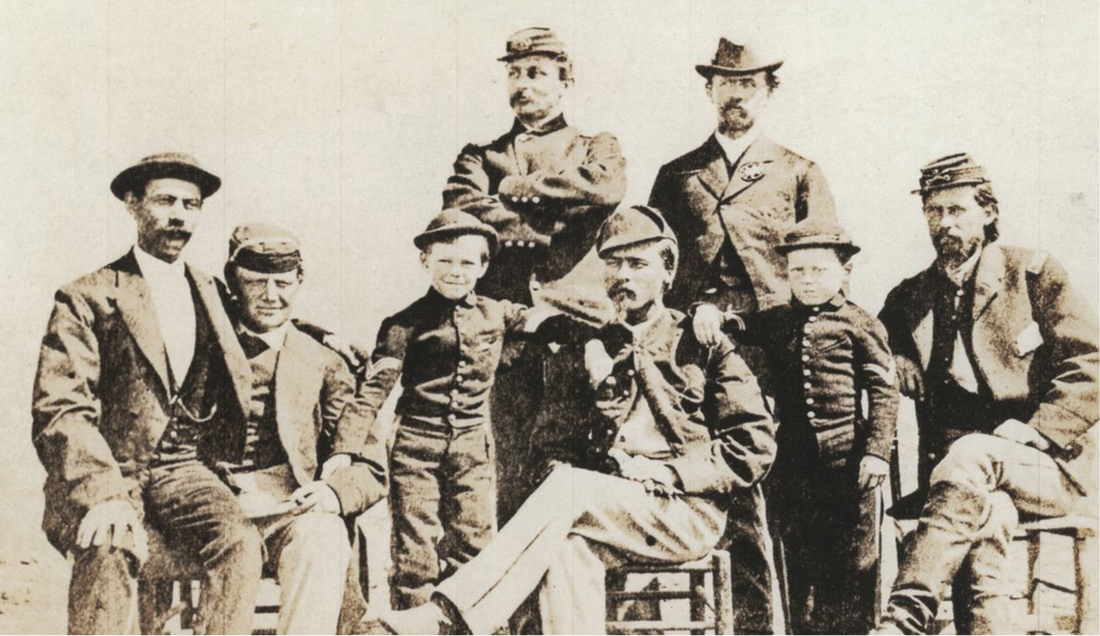
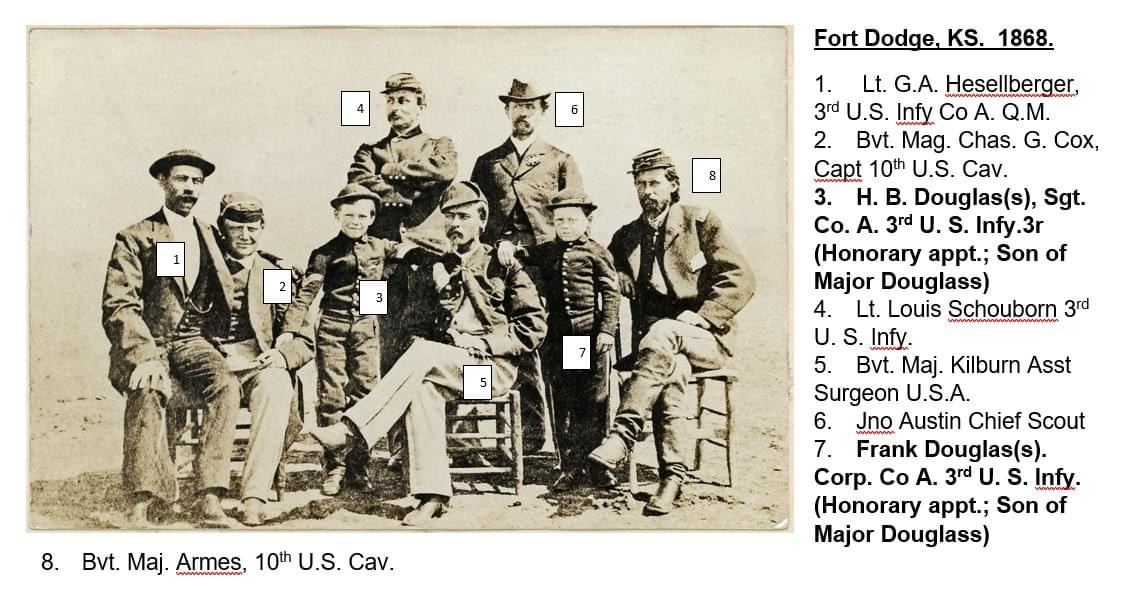
The photo (left) shows the closeness between those who served under Henry Douglass at Fort Dodge and his children, Henry B. Douglass and Frank Douglass. Isadore's the mother of the two boys, made the uniforms as they participated in drills and fulfilled "duties" at the fort. Henry B. was given the "rank" of Sgt., and Frank was given the "rank" of Corporal. When Henry Douglas escorted Isadore's body back to New York for burial in November of 1867, the two boys were left at Fort Dodge in the care of soldiers -- probably those in this photograph. Henry also took his youngest son, Charles Edward (born August 26, 1866) with him, and he was left in the care of Isadore's mother, Angelina Bowman, Wilkes-Barre, PA.
The Hancock War
|
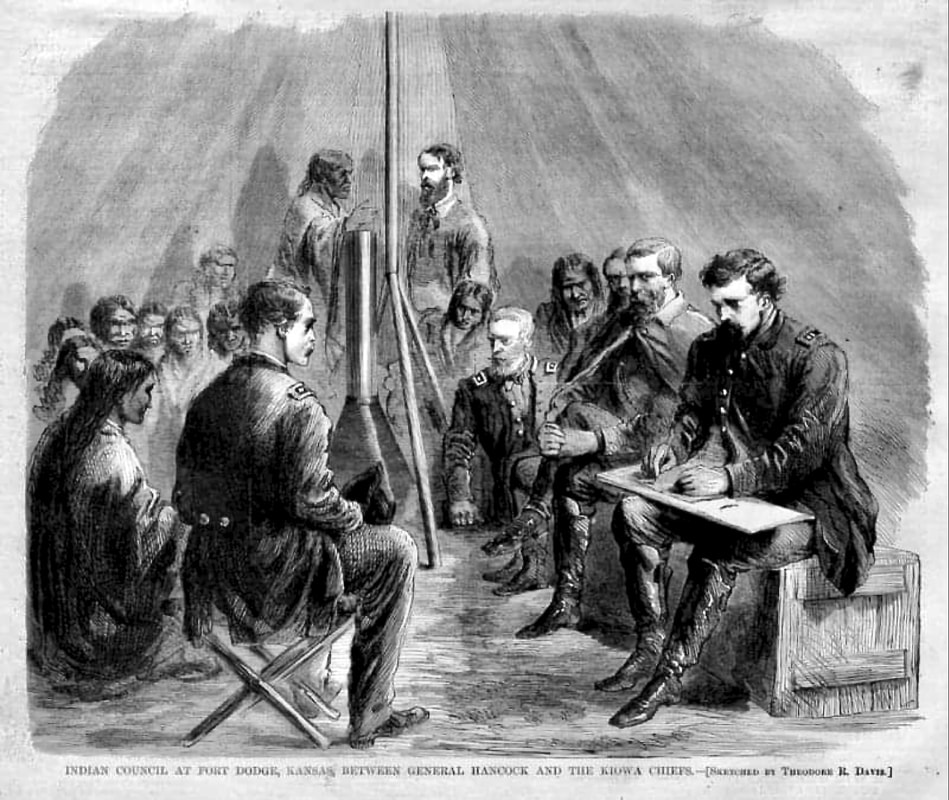
In February of 1867, Maj. Henry Douglass, then commander of Fort Dodge, reported an all-out Indian war was looming. As a result, Maj. Douglas held a series of conferences with Satanta, Satank, Stumbling Bear, and some Kiowa followers. Satanta, the tribe's greatest orator and second most influential chief, was also the most contentious. Undeniably brave and even reckless in battle, he was equally careless with the truth when it served his purpose. It was Satanta who seems to have been behind many of the stories and rumors concerning a confederation of Plains tribes to make war on whites."
During his meetings with the officers from Fort Dodge, Satanta warned that when spring came, there would be a council between the tribes of the northern and southern plains, with a war against the white intruders the likely result "as soon as the grass was one inch high." Whites had come to his country without invitation," he said. They had used his people's resources to harm his people. He wanted them out. |
|
|
Satanta demanded that Fort Dodge and Fort Larned be abandoned immediately. He also insisted that the soldiers and other whites cease using the water, wood, grass, and game belonging to his people, for which no compensation was being paid. In addition, he wanted all military units removed to a location no farther west than the Council Grove, the Santa Fe Trail, and other trails closed, and construction of railroads and telegraph lines across the southern plains halted. Satanta also humorously noted that the livestock at Fort Dodge appeared to be in poor condition and requested that they be given better care, as they would be his when he took the Fort in the spring."
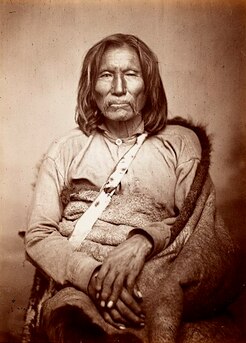
Satank (Set-angya or Set-ankeah, translated as chief Topinabee A quiet Sitting Bear) was a prestigious Kiowa warrior and medicine man. He was born about 1800, probably in Kansas, and killed June 8, 1871. |
|
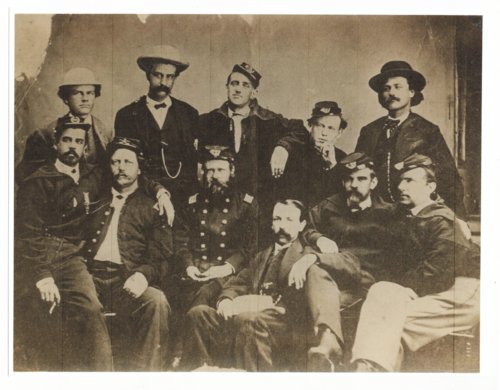
This is a photograph showing soldiers and civilians at Fort Dodge. When this photograph was taken in Topeka, Kansas, all except Crane and Whiting were on trial before Judge Telahay, District of Kansas, charged with giving or selling whiskey to Indians or robbing U.S. mail or arson. The outcome of revengeful action on the part of Bill Seamans et al. discharged scouts Sam Raggles and others. They are identified as (right to left) back row: Charles Crane, publisher, Topeka, Kansas; Charlie Whiting, U.S. Marshall, Topeka, Kansas; Lt. Jno. Proctor Thompson, Company B, 3rd U.S. Infantry; Lt. Phil H. Reade, Company H; Charles Roth, interpreter and ranchman; front row: Dr. Charles S. DeGraw, post surgeon, Med. Dept. U.S.A.; 2 Lt Bradbury Bassett, Troop K, 7th U.S. Cavalry; Maj. Henry Douglass, 3rd U.S. Infantry, post commander; Mr. Soule, clerk, suttler's store, Ft. Dodge; Capt. Jno. Henry Page, Co. F, 3rd U.S. Infantry; and Lt. Tom S. Wallace, Co. H, 3rd U.S. Infantry.
|
|