The Importance of Fort Dodge
Building A Permanent Post 1867
A stone quarry was discovered about five miles from the post in June 1866. General Pope gave permission to hire laborers and stonemasons for construction of new buildings. The following month four laborers were hired and with the assistance of the soldiers a foundation was laid for a company barracks. Sometime in 1866, the sod building erected for a kitchen and mess was refitted to serve as the commanding officers quarters.
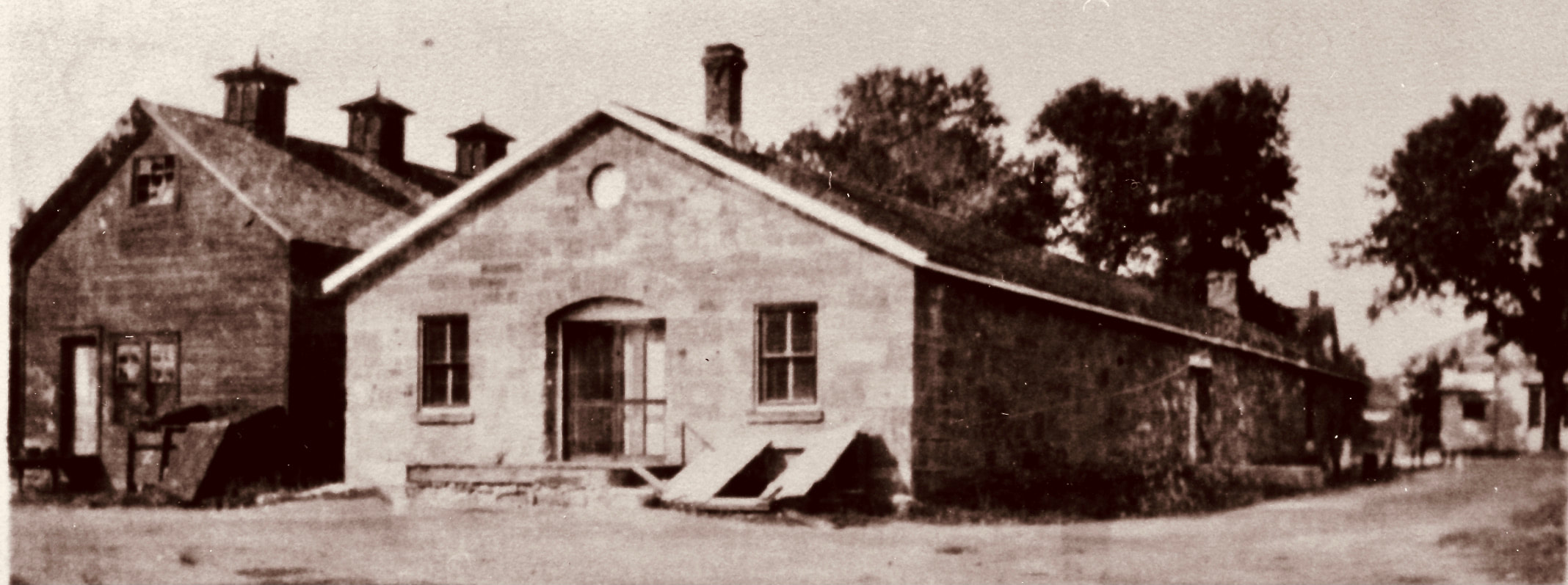
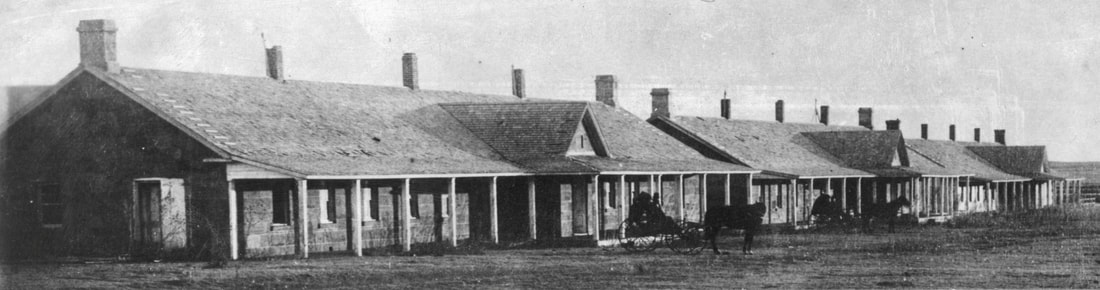
Primary attention was given to constructing two barracks, a hospital, two quartermaster buildings, a subsistence supply building, and a headquarters building to house the commanding officer. All of these structures were built of limestone that both civilians and soldiers laboriously quarried. Sixty teamsters and more than two hundred mules were kept busy hauling the heavy stones from the quarry to the construction sites.
Lieutenant George A. Hesselberger guided the construction and demonstrated a taste for both durability and subtle beauty. The stones used in building were of varying lengths; however, they were cut to eighteen-inch heights and two-foot thicknesses. The heavy rocks were then dressed before their placement by civilian masons.
Primary attention was given to constructing two barracks, a hospital, two quartermaster buildings, a subsistence supply building, and a headquarters building to house the commanding officer. All of these structures were built of limestone that both civilians and soldiers laboriously quarried. Sixty teamsters and more than two hundred mules were kept busy hauling the heavy stones from the quarry to the construction sites.
Lieutenant George A. Hesselberger guided the construction and demonstrated a taste for both durability and subtle beauty. The stones used in building were of varying lengths; however, they were cut to eighteen-inch heights and two-foot thicknesses. The heavy rocks were then dressed before their placement by civilian masons.
Barracks
|
|
Each barracks building was designed to hold a company of approximately sixty men. The barracks were equipped with a kitchen mess room and a dormitory for the men. The latrines were erected just behind the barracks. The hospital included a wardroom adequate to house the anticipated sick of four companies, with an attached administration section for hospital personnel and a separate kitchen.
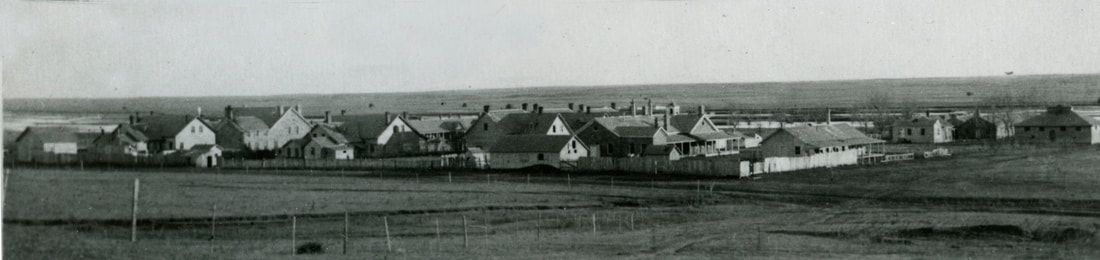
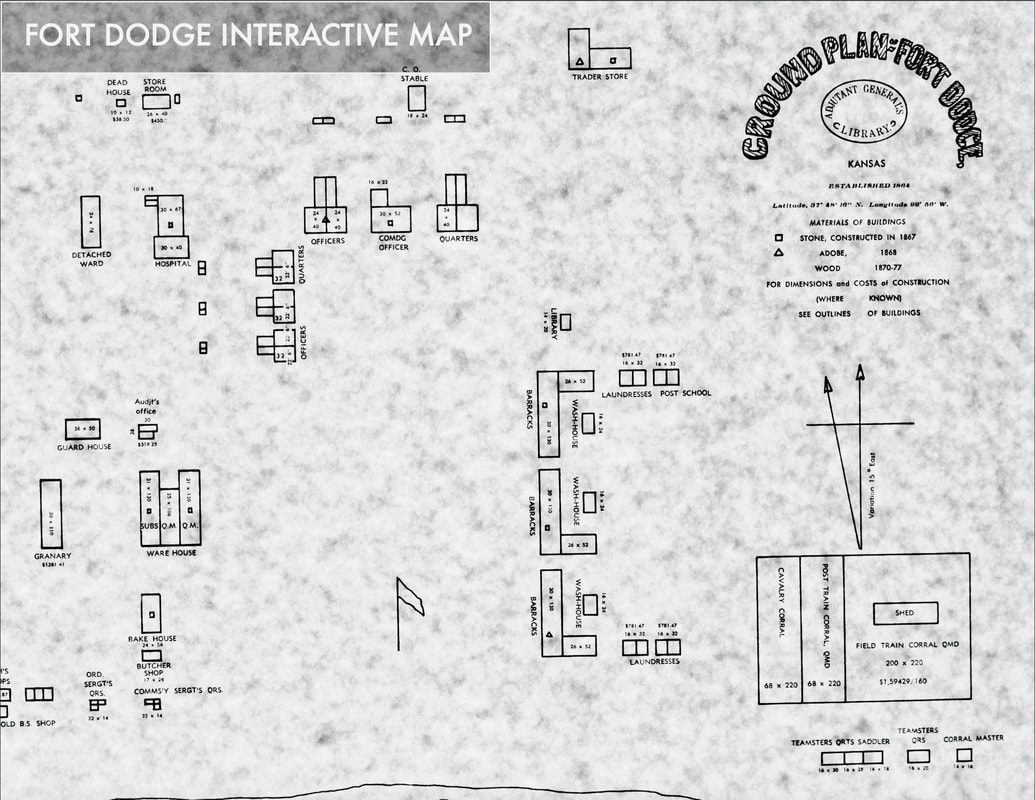
When construction was completed, including several buildings erected after 1868, there were three barracks for enlisted men, two of stone and one of adobe, each one hundred thirty by thirty feet. |
The dormitory in each barracks contained twenty-two double two-tier bunks, providing sleeping space for eighty-eight men. Each bunk held four soldiers, two up and two down, who slept in opposite directions, head to toe. Opposing doors and windows provided ventilation, and the quarters were heated in the winter by wood-burning stoves. There was a water well behind each barracks. A wooden shed was attached to the kitchens and contained a trough where the men could wash. The latrines were about thirty yards behind the quarters.
Commanding Officers Quarters
|
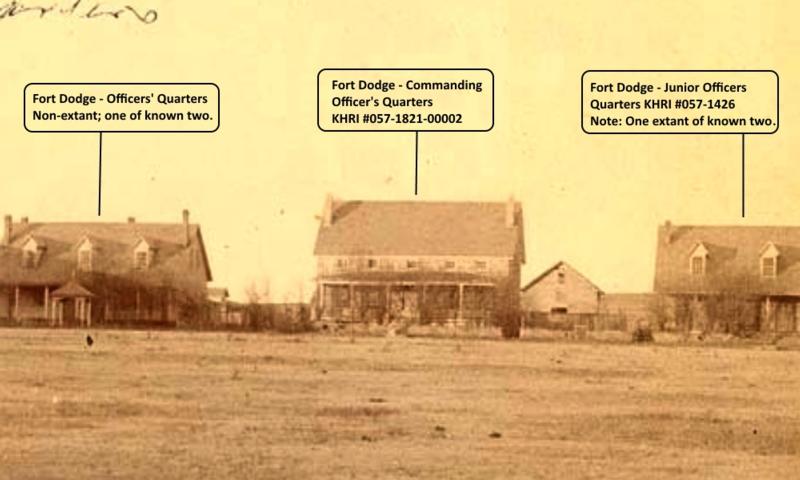
The commanding officer's quarters were the only two-story structure built. The bottom floor included living quarters and administrative rooms where the commanding officer could host his fellow officers for staff meetings or court-martial proceedings, while the second floor was reserved entirely for the commander's family. Because of the second-floor elevation and field of fire, rifle ports were built at floor level to a sustained siege by hostile Indians. The commanding officer’s quarters on the north side of the parade ground comprised a one-and—a—half—story stone building, fifty-two by thirty feet.
|
It contained a central hall on the main floor, with two rooms on each side, eighteen feet square, and a kitchen twenty-six by sixteen feet attached to the rear of one side, forming an “L.” There were four attic rooms on the upper floor. The lower rooms were heated by fireplaces. A frame stable and coach house was located north of the house. There were four sets of captain’s quarters in two duplexes, one of adobe covered with weather boarding and the other of a frame with weather boarding, each forty-four by forty feet, and one and one—half stories high. Each set included a dining room, parlor, bedroom, kitchen, and three attic rooms. There were six sets of lieutenant’s quarters in three frame duplexes, each thirty-five by thirty—two feet, one and one-half stories high. Each set contained a dining room, bedroom, parlor, kitchen, and two attic rooms.
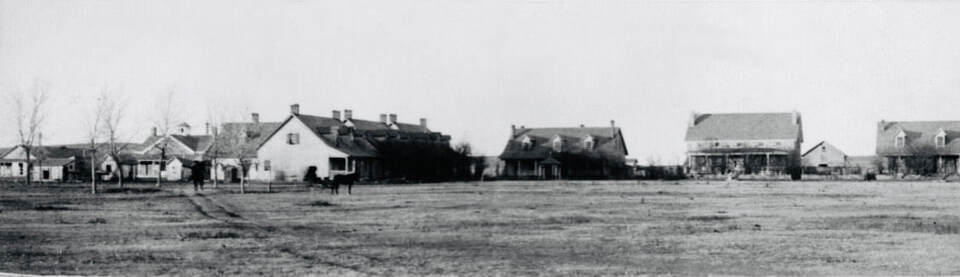
The laundresses and married soldiers were housed in the old dugouts and sod buildings along the river until new laundresses quarters were constructed in 1875. The new quarters comprised eight sets in four duplexes, covered with boards set upright and battened, each thirty—two by sixteen feet. Each contained two rooms for a married soldier and his family. During the latter years, one of these quarters was used as the post school and reading room.
Storehouses and Commissary
There were two stone storehouses, each one hundred thirty by thirty feet, located west of the parade. One served the quartermaster and the other the commissary, which had a cellar beneath to store perishable items. Each building had two rooms partitioned off at the north end for offices. Between the two storehouses was a flame structure, one hundred ten by twenty-seven feet, used as a forage shed. Other buildings included a granary, twenty-eight by twelve feet; a coal shed, seventy-six by forty-one feet; a butcher shop, twenty-eight by seventeen feet; and the commanding officer's office and adjutant's office, thirty by twenty-five feet.
Twin storehouses, each 130 ft. by 30 ft., and a bakery were the first stone buildings to be completed in 1867. The second storehouse stood a few yards to the east. The north ends of each building were partitioned to provide offices for post headquarters and for the quartermaster. A bakery, located several yards behind, had two ovens, and was capable of baking 500 rations of bread each day. The frame structure, two doors to the right, was the original "dead house" and was moved from north of the hospital to its present location.
Twin storehouses, each 130 ft. by 30 ft., and a bakery were the first stone buildings to be completed in 1867. The second storehouse stood a few yards to the east. The north ends of each building were partitioned to provide offices for post headquarters and for the quartermaster. A bakery, located several yards behind, had two ovens, and was capable of baking 500 rations of bread each day. The frame structure, two doors to the right, was the original "dead house" and was moved from north of the hospital to its present location.